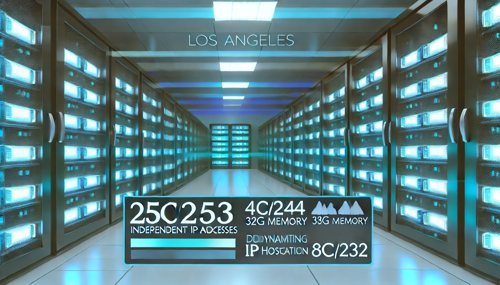
introduction: in the face of increasingly complex network attack threats, it is difficult for a single protection to meet the continuous availability requirements. based on the perspective of combining american 200g high-defense servers with cloud-native architecture, this article proposes an implementable anti-attack resilience solution, aiming to help enterprises improve availability and recovery capabilities under geographical distribution, traffic surges, and application complexity.
overview of american 200g high defense server
the american 200g high-defense server refers to a protection node that provides 200gbps level cleaning capabilities and is suitable for high-intensity ddos attack scenarios. its features include large traffic inlet processing, intelligent traffic diversion and multi-tenant isolation. it is suitable for cooperation with cloud native environments and serves as the first line of edge defense to reduce the probability of attacks reaching the application layer directly.
the role and deployment location of high-defense servers
high-defense servers are usually deployed at edge nodes or data center exits to undertake traffic filtering and cleaning tasks. placing the us 200g high-defense server at the access layer can intercept malicious traffic at the network boundary, reduce the load on the back-end cloud native platform and the risk of misjudgment, and gain a time window for elastic expansion.
basic points of cloud native architecture
cloud-native architecture takes containerization, microservices, declarative management and automation as its core, emphasizing rapid deployment and elastic scaling. through platforms such as kubernetes, applications can be automatically expanded during traffic fluctuations and combined with service grids to achieve traffic control and fault isolation, improving overall anti-attack resilience.
combining strategy 1: edge distribution and traffic cleaning
combining us 200g high-defense servers with global edge distribution, traffic cleaning and rate limiting can be performed at multiple entrances. malicious traffic is directed to the cleaning center through intelligent routing and anycast technology, and legitimate traffic is forwarded to cloud native clusters through cdn or load balancing, reducing single-point pressure and interruption risks.
combining strategy two: containerization and automatic elastic scaling
adopting containerized deployment and configuring elastic scaling strategies on a cloud-native platform can quickly expand back-end services when legitimate traffic surges after cleaning. properly set the hpa/cluster autoscaler threshold and cooling time, and cooperate with horizontal expansion and resource reservation to ensure that the expansion process is stable and does not trigger cascading failures.
combining strategy 3: service grid and microservice isolation
the service mesh provides observability, circuit breaking, and flow control capabilities to help isolate affected microservices during an attack. in conjunction with the edge protection of us 200g high-defense servers, the service grid can implement fine-grained current limiting, retry and fault injection strategies to reduce the impact of attacks on overall application availability.
combination strategy four: intelligent flow control and circuit breaker degradation
implementing intelligent flow control and circuit breaker mechanisms at the application layer can quickly downgrade non-critical functions when abnormal traffic or delays are detected, giving priority to ensuring the availability of core services. cooperating with the traffic marking of the high-defense server, it can achieve end-to-end attack and defense coordination and business priority guarantee.
monitoring, logging and automated response
collect edge defense, network and application indicators through a unified monitoring and logging platform, configure anomaly detection and automatically respond to work orders. when an attack occurs, a predefined playbook is launched to realize closed-loop automation from traffic cleaning, capacity expansion to configuration adjustment, and shorten the fault recovery time.
deployment and compliance essentials
when deploying high-defense nodes in the united states, you need to pay attention to local compliance and data sovereignty requirements, and properly plan traffic paths and log storage strategies. ensure that the identity authentication, network policy and access control of the cloud native platform are aligned with high-defense services to avoid secondary risks caused by improper permission configuration.
operation and maintenance and cost-effectiveness optimization
when combining us 200g high-defense servers with cloud-native architecture, the impact of elasticity strategies on resource consumption should be evaluated and capacity estimates should be made. reduce manual response costs through automated and strategic operation and maintenance, and achieve a balance between protection and cost by combining on-demand cleaning and traffic scheduling.
summary and suggestions
conclusion: the combination of us 200g high-defense servers and cloud-native architecture can significantly improve anti-attack resilience. the key lies in the collaboration of edge cleaning, containerized resilience, service grid isolation and intelligent flow control. it is recommended to implement it in stages: first establish edge protection and monitoring, then gradually promote cloud-native elasticity and automated response, and continue to drill and optimize emergency playbooks.
- Latest articles
- When Choosing A List Of Hong Kong Server Hosting Providers, Consider Network And Security Capabilities
- Best Practices For Isolation Strategies And Network Security For Taiwan-native IP Virtual Machines In Multi-tenant Environments
- SS Hong Kong CN2 VPS Recommendations: The Best SS Hong Kong CN2 VPS For High-frequency Application Scenarios
- User Experience Optimization: Singapore Server Cloud Server Access Acceleration Combined With CDN Integration Solution
- Enterprise-level Service Evaluation: In-depth Analysis Of Cambodia VPS Stability And Scalability
- Where Can You Find A Variety Of Billing Options For Vietnam Cloud Servers? To Meet Different Budget Needs
- Enterprise Migration Guide VPS Software Vietnam Practical Data Backup And Fault Recovery Manual
- From A Long-term Operational Perspective, The Advantages Of Hong Kong Server Clusters Are Reflected In Maintenance And Upgrades
- Technical Test Report Shows High Latency In Korean Telecom VPS, Common Bottlenecks, And Repair Methods
- Malaysian CN2 Access Guide And Common Configuration Examples For Developers
- Popular tags
-
How Can Companies Reduce The Cost Of US CN2 Servers Through Optimized Allocation
This article explains how businesses can reduce the cost of US CN2 servers through optimized allocation, covering actionable recommendations such as understanding cost components, selecting the right options, optimizing bandwidth and storage, using auto-scaling, and implementing caching and procurement strategies. -

How Effective Is The Optimization Of US Site Networks Under The Latest Algorithms, And Key Points For Risk Control
Analyzes the optimization effects and key risk control points of U.S. site networks under the latest algorithms, covering recognition capabilities, content and linking strategies, technical architecture, compliance monitoring, and practical recommendations, helping webmasters evaluate and optimize site networks under compliance conditions. -

The Best American Site Group Server Recommendations Help You Optimize Your Website
Recommend the best US site group server to help your website optimize and improve SEO results.